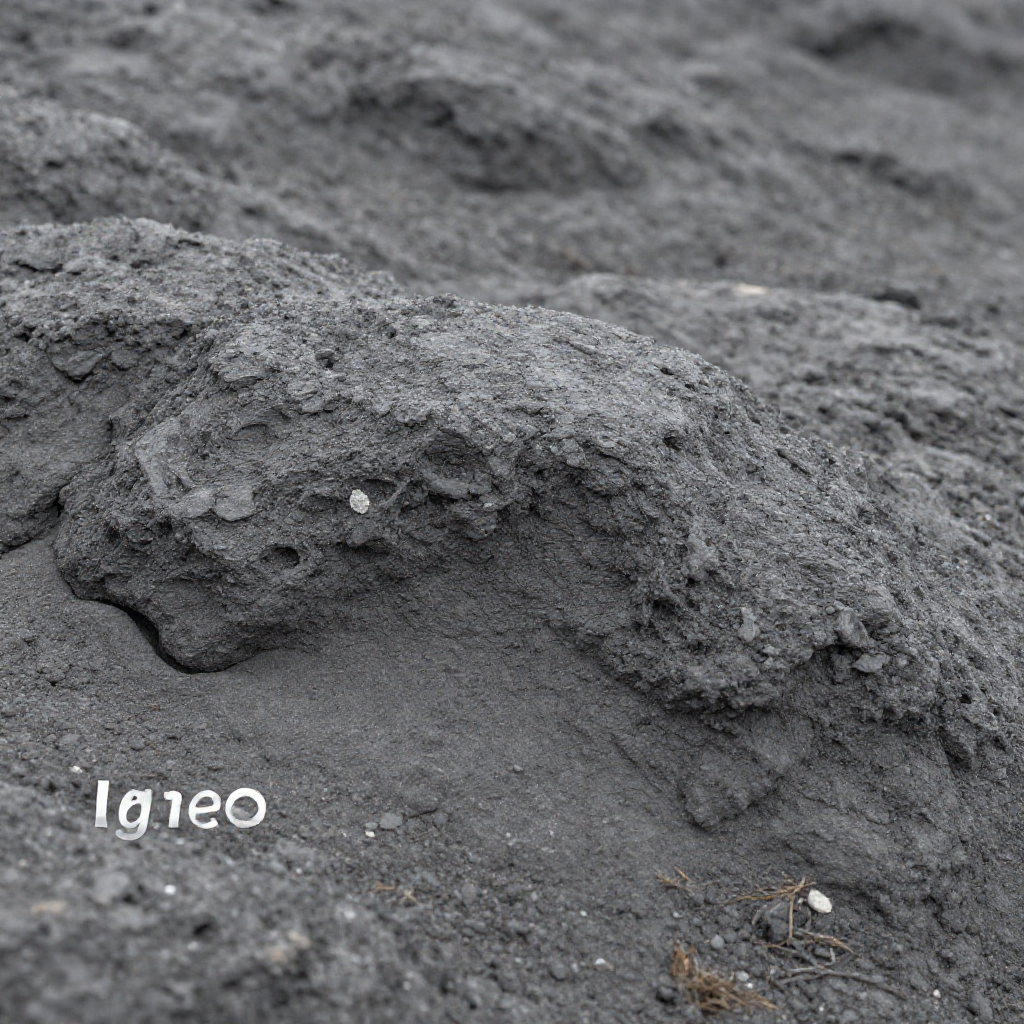
Three names, one rock, endless confusion. Ask most people what makes a rock igneous, sedimentary, or metamorphic and you get the definition they memorized in eighth grade, filed away, and mostly forgotten. Ask a working rockhound and you get something closer to the truth: those three names are not permanent boxes. They are stages in one continuous churn, and once you've held a piece of banded gneiss or split a slab of shale in your hands, the categories stop being trivia and start being useful.
The Rock Cycle Is a Loop, Not a Chart
Most classroom diagrams draw the rock cycle as three circles connected by arrows, which makes it look tidy and finished. It isn't. Every rock on the surface of the planet is somewhere in an ongoing process: cooling from melt, piling up as sediment, or recrystallizing under pressure, and any one of those states can eventually become one of the other two. A boulder of granite sitting in a riverbed today may be sand in a thousand years, sandstone in a million, and gneiss in fifty million. None of the three rock types is where the story ends. For the mineral side of that same story, the geology explained guide covers how these rocks form the raw material for the minerals you find while rockhounding.
Igneous Rock: What's Left When Melt Cools Down
Igneous rock starts as magma or lava, molten rock that cools and solidifies into a solid mass. What it looks like when it's done depends almost entirely on how fast it cooled.
Magma that cools slowly, buried deep underground and insulated by miles of surrounding rock, has time to grow large, visible crystals as it solidifies. Granite is the textbook case: cut a polished slab and you can pick out individual grains of quartz, feldspar, and mica with the naked eye, each one a crystal that had thousands or millions of years to grow. Geologists call this intrusive or plutonic rock, since it forms as an intrusion into rock that's already there.
Lava that cools at or near the surface doesn't get that luxury. A volcanic eruption can go from molten to solid in minutes to years, which leaves no time for large crystals to form. The result is extrusive rock: basalt, fine-grained and dark, cooling too fast for crystals to grow past microscopic size, or obsidian, cooling so fast it never crystallizes at all and hardens into natural glass instead. Same starting material as granite, but a completely different finished texture, purely because of how much time the cooling took.
Sedimentary Rock: Built From What's Already Broken Down
Sedimentary rock doesn't come from melt. It comes from leftovers: weathered fragments of other rocks, dissolved minerals, and organic material that pile up in layers and eventually get compacted and cemented into something solid. Wind, rivers, and waves do the work of breaking older rock down and carrying the pieces somewhere they can settle, grain by grain, over time spans that make a human lifetime look instant.
Sandstone forms from cemented sand grains, often the eroded remains of older igneous or metamorphic rock. Limestone usually forms from calcium carbonate, frequently the accumulated shells and skeletal material of marine organisms settling on an ancient sea floor. Shale forms from the finest sediment of all, compacted layers of mud and clay pressed together so tightly the individual particles are invisible without a microscope.
This is also the rock type most likely to hold a fossil, and the reason is mechanical, not mysterious. Sediment buries organisms gently, layer by layer, without the heat or pressure that would destroy their shape. Igneous rock forms in conditions hot enough to melt whatever it touches, and metamorphic rock forms under enough heat and pressure to erase fine detail. Sedimentary rock is the one setting soft enough to preserve a shell, a leaf, or a bone as the layers around it harden. That overlap is why the fossils guide and the sedimentary rock story cover so much of the same ground: find one, and you're usually standing on the other.
Metamorphic Rock: Changed Without Ever Melting
Metamorphic rock starts as an already-existing igneous or sedimentary rock that gets subjected to enough heat and pressure, usually deep underground during mountain building or burial, to change its internal structure without fully melting. If it melted, it would just become magma and start the igneous story over. Metamorphism happens in the space below full melting, where the minerals inside the rock recrystallize into new arrangements while staying solid.
The result is typically denser and often visibly banded or foliated, meaning its minerals have aligned into parallel layers under directional pressure. Limestone, subjected to heat and pressure, recrystallizes into marble, its calcite crystals fusing into the dense, evenly grained stone that sculptors prize. Shale, put through the same kind of squeeze, becomes slate, its clay particles flattening and aligning until the rock splits cleanly along thin, parallel sheets. Granite can undergo the same transformation into gneiss, recognizable by the light and dark mineral bands stretched and stacked by pressure that never fully melted the rock.
Why None of This Is Permanent
Here's the part the three-box version of the story leaves out: every rock is a temporary answer. Marble at the surface weathers back into sediment. Gneiss buried deep enough eventually melts into magma and starts over as an igneous rock. Sandstone caught in a collision zone gets folded and cooked into quartzite. The three categories describe a rock's current state, not its identity, and the same material can pass through all three over geologic time, sometimes more than once.
That's worth remembering the next time you're turning a specimen over in your hand and trying to work out what it is. The five-test approach in how to identify a rock you found and the broader breakdown in rock and mineral ID both start from the same premise this piece does: a rock's texture and structure are a record of what it's been through, not a fixed label. Learn to read that record, and identification stops being guesswork.