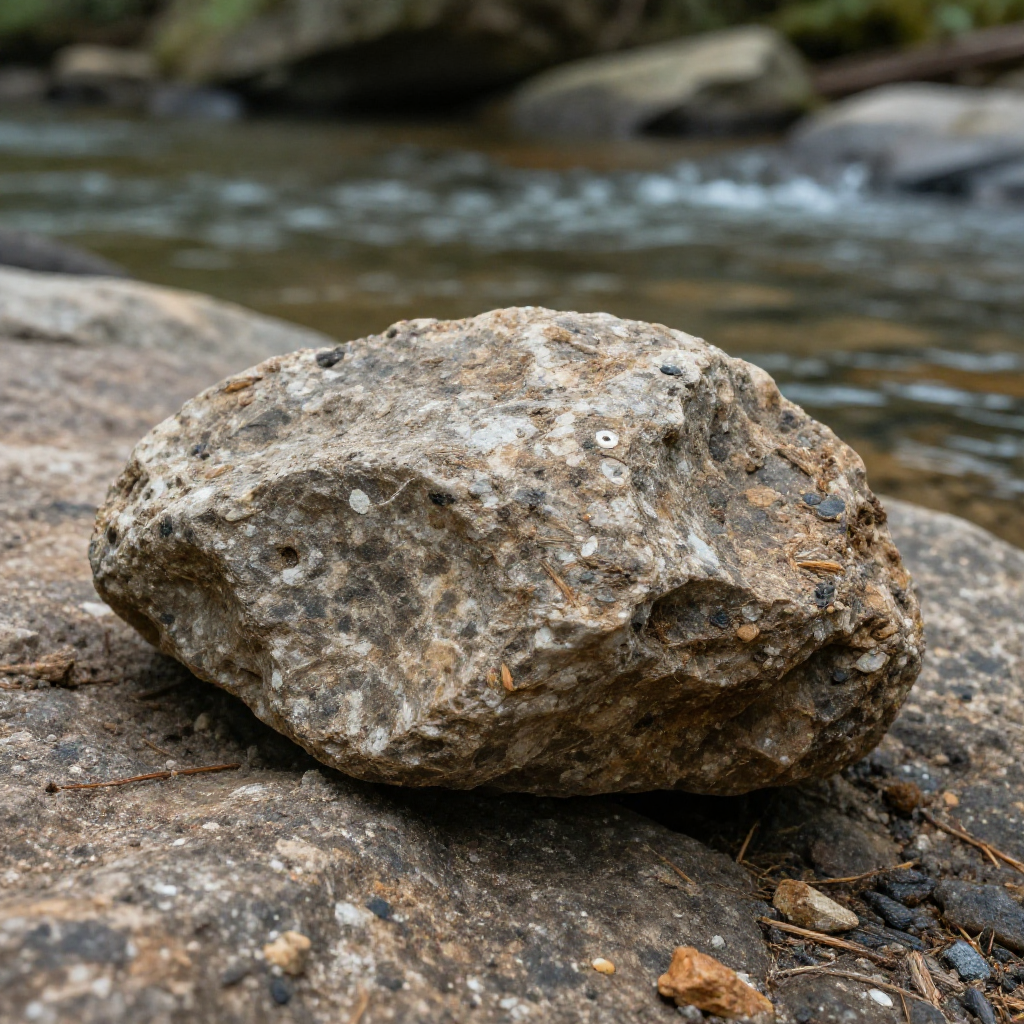
A creek bed has already done work that would otherwise take you an afternoon of hammering and guessing. Moving water sorts rock by density and durability, over and over, for as long as the water has been running. That sorting is the single biggest reason waterways beat hillsides and road cuts for someone just starting out.
The Current Does the Sorting For You
Water is not gentle with rock, but it is consistent. Heavier, denser material settles faster and collects in predictable spots: the inside curve of a bend, behind a boulder, at the tail of a gravel bar where the current slows. Softer, more fractured rock breaks down and washes on downstream as sediment. What's left behind in the gravel is a concentrated sample of whatever in the local geology is dense and durable enough to survive the trip, agates, jasper, quartz, garnet, and other material tough enough to outlast the rest.
On a hillside or a fresh road cut, you're looking at whatever the slope or the excavator exposed, undifferentiated and often still buried in matrix. In a creek, that separating and clearing has already happened. You're not digging through overburden to find the good stuff; you're looking at a shelf where the water put it.
The Rock Looks Better Before You Touch It
Natural tumbling is the other half of the advantage. A pebble that's spent years rolling along a streambed arrives with its surface abraded smooth, the way a rock tumbler does it on purpose over weeks of grit and polish, just slower and free. That smoothing strips away the dull weathering rind that hides a rock's actual structure.
Banding, crystal faces, and texture read far more clearly on a water-worn stone than on a rough, freshly broken one. You can often tell agate from plain chert at a glance in a creek bed, a distinction that takes a loupe and some practice on unweathered rock from a hillside. If you want to see what natural tumbling and human-assisted tumbling actually have in common, or where they diverge, the rock tumbling and lapidary guide covers the process end to end.
Easier Ground, Fewer Ways to Get Hurt
A gravel bar is flat. A scree slope is not. Loose talus shifts underfoot and a hillside dig means kneeling on an incline while gravity works against you. Wading a shallow creek or walking a gravel bar puts you on stable, level ground for most of the search, which matters more than it sounds like it does when you're three hours into a trip and your knees are the ones filing the complaint.
Every Rain Resets the Table
A hillside you've picked over stays picked over until the next excavation or rockslide exposes something new. A creek doesn't work that way. Seasonal high water and storm runoff move gravel around, burying some material and exposing more from upstream and from the banks. The same gravel bar you searched last spring can turn up entirely different material after a hard spring runoff or a series of summer storms. That's not luck, it's the same sorting process running again on a fresh batch of gravel.
Moving Water Doesn't Rewrite the Rules
None of this means a creek is a free-for-all. Water levels can rise fast after rain upstream, sometimes long before it starts raining where you're standing, so check conditions and never wade a creek you can't see the bottom of clearly. A dry, easy crossing in the morning can be a different creek by afternoon.
Legally, a creek bed is not neutral ground. The same land-permission rules that apply to a hillside or a private quarry apply to the water running through it: public land management rules, private property lines that often extend into or across the streambed, and state-specific water and access law all still apply. Moving water doesn't make collecting automatically legal, and assuming otherwise is the fastest way to end a good hobby with a bad conversation. Sort out where you're actually allowed to be before you sort through what the water left behind. The where to rockhound guide is the place to start on access and permission questions before you pick a spot.
What to Do With What You Find
Once you've got a pocket full of smoothed, sorted candidates, the identification part gets easier precisely because the water already did the prep work. A quick pass through the rock and mineral ID reference, or the more hands-on five-test walkthrough, will get you from "smooth banded rock" to an actual answer faster on creek material than on anything freshly broken off a hillside.